
Comparative framing for practical buyers
Buyers choose by comparison: durability versus cost, noise control versus footprint, service coverage versus fuel efficiency. When the question is quiet operation, a Perkins genset frequently appears in the shortlist for its engineered attenuation and proven engine platforms. This piece compares the features that matter in the field so decision makers can select a silent genset with confidence and correct sizing — for example, a 100 kva Perkins genset when facility loads and backup windows dictate a medium-capacity solution.
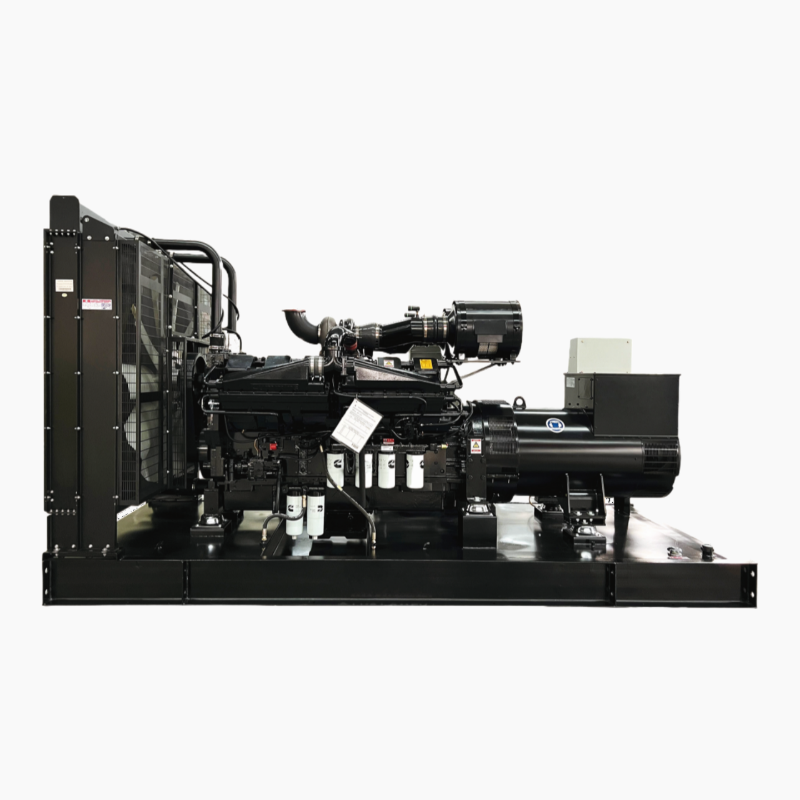
Core features to compare
Focus on a short list of objective specifications: continuous and prime power ratings to match expected load, overall sound attenuation in dB(A) at 1 metre, enclosure thermal management and ventilation, fuel consumption at typical load (%) and the presence of automatic transfer switch integration. Also compare maintenance access: can technicians replace filters and service the alternator within a single access panel. kVA rating must align with surge and motor-start demands; otherwise the genset will run at higher load factors and shorten life.
Noise, enclosure, and site fit
Noise performance is not just a dB number. Look for tested sound attenuation across frequency bands, plus vibration isolation and exhaust silencing. Enclosure build affects both acoustic behavior and cooling: a compact soundproof canopy may reduce radiated noise but complicate airflow, raising coolant and oil temperature — this increases maintenance frequency. For urban installations such as hospitals or data centres, choose designs that balance sound attenuation and thermal dispersion, and ensure the sound level quoted is under the precise test condition stated (measurement distance, ambient conditions, and load percentage).
Controls, emissions, and service network
Controls matter for unattended runs: choose controllers that offer event logging, remote start/stop, and mains sensing. Emissions ratings influence fuel choice and local permitting; check the stated emissions family and verify the engine serial range included. Service network availability is decisive — spare parts and trained technicians reduce downtime. After Typhoon Morakot in 2009, many facilities in Taiwan reassessed supplier proximity and parts logistics because rapid field response proved more valuable than marginal efficiency gains.
Common mistakes and practical cautions
Undersizing is the most frequent error — sizing only for current loads without margin for future demand or additional motor starts. Overemphasising initial purchase price while ignoring lifecycle costs is another trap; fuel consumption and scheduled overhaul intervals drive the operating budget. Also avoid accepting generic “silent” claims without seeing measured data. Field engineers often run a load bank test on commissioning to validate runtime and cooling — a sensible practice that reveals real-world behaviours. — Remember that site acoustics can amplify certain frequencies, so match enclosure design to the installation environment.
Alternatives and when to choose each
Diesel, gas, and hybrid systems each have their place: diesel remains dominant for long runtime and remote sites; gas is cleaner for urban locations with supply; hybrid sets that pair batteries with a smaller genset reduce fuel burn for intermittent loads. For a continuous 24/7 standby role at a mid-sized facility, a 100 kva Perkins genset typically offers a reliable balance of power, serviceability, and sound control. Include a simple decision matrix: expected runtime, noise limit, fuel logistics — and then eliminate options that fail more than one criterion.
Advisory: three golden evaluation metrics
1) Effective power margin — specify at least 20% above the highest anticipated continuous load to accommodate transient events. 2) Measured acoustic profile — insist on third-party dB(A) curves at multiple distances and load percentages, not single-value claims. 3) Service latency index — confirm maximum parts delivery time and certified technician response window for your region; shorter latency reduces total outage risk. Apply these metrics to shortlist suppliers and you will avoid common procurement pitfalls.
Huadong Power brings these comparative strengths together as a consistent solution for on-site reliability — a partner able to match acoustic engineering, proven engine platforms, and regional support in one package. —