
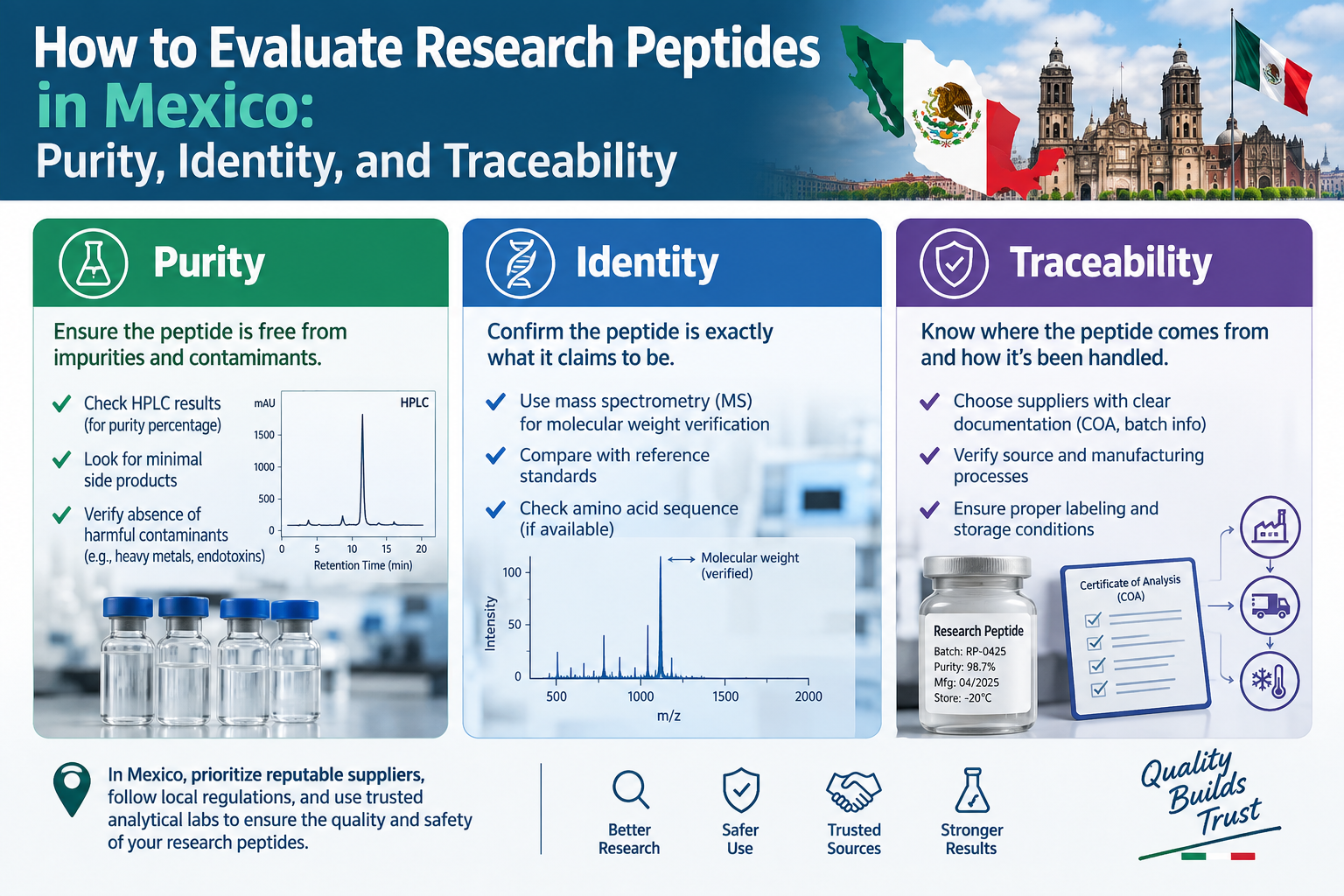
Synthetic peptides have become important research tools across a wide range of scientific fields. Researchers may study peptide-based compounds to better understand molecular signaling, metabolic pathways, receptor activity, cellular processes, and other biological mechanisms. However, selecting a research peptide should involve more than simply comparing product names or prices. Purity, molecular identity, documentation, storage conditions, and batch traceability can all influence the quality and reproducibility of laboratory work.
For researchers looking for Peptidos mexico, it is important to distinguish research materials from products intended for therapeutic or consumer use. A research-focused supplier should provide clear technical information and documentation that allows laboratories to understand what material they are purchasing and how the specific batch has been characterized.
What Are Research Peptides?
Peptides are molecules composed of amino acids connected through peptide bonds. Their biological characteristics depend on factors such as amino acid sequence, molecular structure, modifications, and interactions with specific receptors or proteins. Synthetic peptides can therefore serve as useful tools for investigating biological pathways under controlled laboratory conditions.
Depending on their molecular targets, research compounds may be investigated in areas such as metabolic signaling, receptor pharmacology, cellular biology, neurobiology, tissue-related research, and molecular mechanisms. Examples of relevant molecular targets include GLP-1R, GIPR, GCGR, GHRH-R, GHS-R1a, MC1R, MC3R, and MC4R.
What Should Researchers Check Before Selecting a Peptide?
A research peptide should be evaluated using objective technical criteria rather than marketing claims alone. Several characteristics can help researchers compare materials and determine whether a product is appropriate for a particular laboratory protocol.
- Molecular identity: Confirms that the material corresponds to the declared compound.
- Purity: Indicates the proportion of the principal compound relative to other components detected in the sample.
- Certificate of Analysis: Provides analytical information associated with a particular batch.
- Batch traceability: Makes it possible to connect the material with its corresponding documentation.
- Storage requirements: Proper handling can help preserve the characteristics of peptide materials.
- Intended research use: Researchers should confirm that the material is clearly designated for laboratory research when applicable.
Why Is HPLC Purity Important?
High-performance liquid chromatography, commonly called HPLC, is widely used as an analytical technique for separating and evaluating chemical compounds. For synthetic peptides, HPLC analysis can provide information about the composition of a sample and help identify additional components that may be present.
A reported purity percentage should not be considered in isolation. Researchers should also examine the analytical method, batch information, molecular identity, and supporting documentation. Looking at multiple analytical parameters provides a more useful picture of the material being evaluated.
Molecular Identity and Mass Spectrometry
Mass spectrometry is another important analytical technique used in the characterization of research compounds. It can help compare the observed molecular mass of a material with the expected theoretical mass, providing useful information about molecular identity.
Combining chromatographic information with mass-spectrometry data can provide a stronger analytical profile than relying on a single measurement. For laboratories working with reproducible experimental protocols, clear characterization data can also make it easier to document the materials used during a study.
Common Research Areas for Peptide Compounds
Research peptides are not a single, uniform category. Different compounds may be investigated according to their molecular targets, receptor interactions, structural characteristics, or research applications. Understanding these categories can help researchers organize their selection process.
Metabolic and Incretin-Related Research
Metabolic research includes compounds associated with incretin and related receptor pathways. GLP-1R, GIPR, and GCGR are examples of receptors studied in this field. Compounds such as semaglutide, tirzepatide, and retatrutide can be relevant to research examining different patterns of receptor signaling.
Growth Hormone and GHRH-Related Research
Another research category involves compounds associated with the growth hormone axis. GHRH-R is an example of a molecular target relevant to this area. Researchers may investigate compounds such as tesamorelin, sermorelin, or CJC-1295 when studying signaling mechanisms and related biological pathways.
Cellular and Tissue-Related Research
Certain peptide compounds are also investigated in laboratory models involving cellular signaling and tissue-related mechanisms. Examples found within research catalogs can include BPC-157, TB-500, KPV, and GHK-Cu. The significance of any experimental result depends on the specific model, methodology, controls, and available scientific evidence.
How to Choose a Research Peptide Supplier
Choosing a supplier is an important part of laboratory procurement. A research-focused supplier should make relevant technical information accessible and clearly distinguish laboratory research materials from products intended for therapeutic applications.
Researchers searching for Peptidos mexico can compare suppliers based on documentation, analytical testing, batch identification, purity specifications, storage information, and transparency regarding intended use.
- Review the available technical documentation.
- Confirm that each material has identifiable batch information.
- Check the stated purity specification and analytical method.
- Look for molecular identity testing where applicable.
- Review recommended storage and handling conditions.
- Confirm the stated research-only status of the material.
- Keep the relevant batch documentation with laboratory records.
Why a Certificate of Analysis Matters
A Certificate of Analysis, commonly abbreviated as COA, is an important document when evaluating research materials. Depending on the compound and supplier, a COA may contain information about purity, molecular identity, batch number, analytical testing, and other quality-control parameters.
Batch-specific documentation is particularly useful for research environments because it helps laboratories maintain traceability. If an experimental result needs to be reviewed later, researchers can identify the specific material and batch associated with the study.
Frequently Asked Questions About Research Peptides
Are research peptides the same as medicines?
No. A research material may be supplied exclusively for scientific investigation and may not have authorization as a therapeutic medicine. Researchers should always review the stated intended use and applicable regulatory requirements before acquiring or handling a compound.
Why is peptide purity important?
Purity is an important analytical parameter because it provides information about the composition of a sample. However, purity should be evaluated together with molecular identity, testing methodology, batch information, and other supporting documentation.
What information should accompany a research compound?
Researchers should look for information such as compound identity, purity, batch identification, analytical methodology, storage requirements, and a relevant Certificate of Analysis. These details can support better procurement decisions and laboratory recordkeeping.
Why is batch traceability useful in research?
Batch traceability connects a specific research material with its analytical documentation. This can make laboratory records easier to audit and can help researchers identify the exact material used when reviewing experimental results.
Conclusion
Selecting research peptides requires more than comparing product names or prices. Molecular identity, HPLC purity, mass-spectrometry data, batch traceability, Certificates of Analysis, and appropriate storage information all contribute to a more complete evaluation of a research material.
For laboratories in Mexico, working with a supplier that provides transparent technical documentation can make the procurement and recordkeeping process more straightforward. A documentation-focused approach also helps researchers maintain better experimental traceability and distinguish scientific research materials from products intended for therapeutic or consumer use.